How Blockchain Is Set to Impact the Supply Chain Industry
10 September 2026
For years, the supply chain has been the quiet engine of global commerce. It moves raw materials, finished goods, and everything in between across borders, oceans, and warehouses. Yet for all its sophistication, the industry still relies on paper trails, manual reconciliations, and trust between parties that often have conflicting interests. A single shipping container can pass through dozens of hands, each maintaining its own ledger, its own records, and its own version of the truth. Disputes arise over delays, damages, and payments. Audits take weeks. Fraud slips through cracks.
Blockchain technology promises to change much of that, but not in the way the hype suggests. It is not a magic wand that will make every supply chain transparent overnight. It is not a replacement for physical inspections or real-world logistics. What blockchain does offer is a shared, tamper-resistant record of transactions and events. When applied thoughtfully, it can reduce friction, increase accountability, and create a single source of truth that all authorized parties can trust. The key is understanding where it helps and where it does not.

The Core Problem Blockchain Solves: Fragmented Trust
Before diving into applications, it helps to understand why supply chains are so vulnerable to inefficiency. The fundamental issue is that no single actor controls the entire chain. A manufacturer sources parts from suppliers, who source from sub-suppliers, who source raw materials. Freight forwarders arrange transport. Customs brokers handle clearance. Insurers assess risk. Banks finance the movement of goods. Each of these parties keeps its own records, often in incompatible formats, and shares only what is necessary through emails, PDFs, and faxes.This fragmentation creates three persistent problems. First, information asymmetry: one party knows something that another needs but cannot easily verify. Second, reconciliation overhead: when two parties compare their records, they often find mismatches that require time-consuming resolution. Third, fraud and error: because records are siloed, it is possible for a party to present false documentation, or for honest mistakes to go unnoticed until they cause significant damage.
Blockchain addresses these problems by providing a distributed ledger. Instead of each company maintaining its own private database, they all contribute to a shared, synchronized record. Once a transaction is recorded and validated by the network, it cannot be altered retroactively without consensus from the majority. This does not make the data inherently truthful in the physical world, but it makes the digital trail far more reliable.

What Blockchain Actually Does in a Supply Chain Context
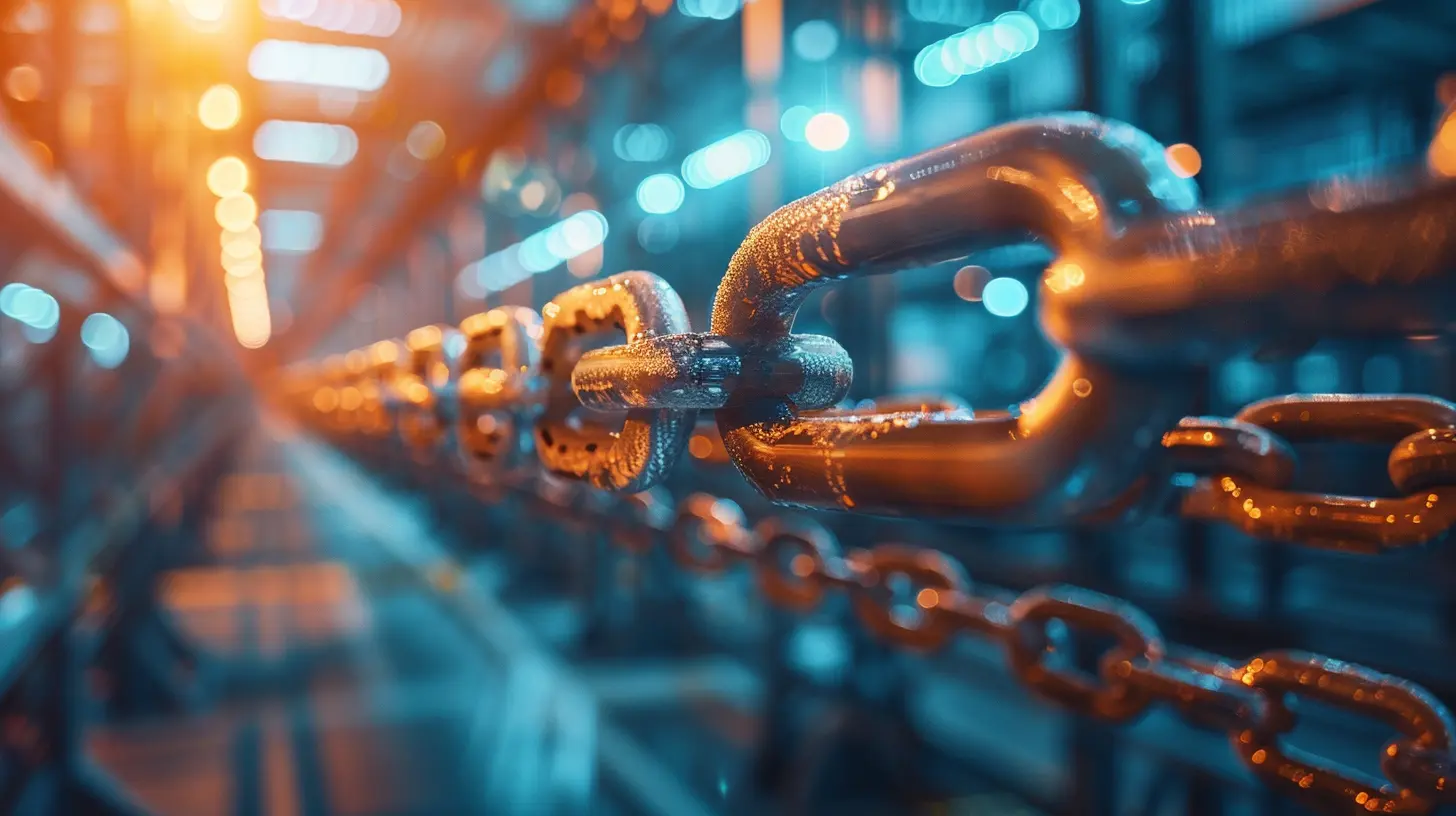
To be precise, blockchain is not a database in the traditional sense. It is a chain of blocks, where each block contains a set of transactions, a timestamp, and a cryptographic hash of the previous block. This design makes it extremely difficult to change any historical record without changing every subsequent block, which would require overwhelming computational power on a public network or collusion among a majority of validators on a private one.In a supply chain scenario, each "transaction" can represent a real-world event. A batch of goods leaves a factory. It arrives at a port. It clears customs. It is loaded onto a vessel. It arrives at a distribution center. Each event is recorded with data such as location, time, temperature, and the parties involved. Smart contracts, which are self-executing agreements encoded on the blockchain, can trigger actions automatically when conditions are met. For example, a smart contract might release payment to a supplier once a shipment is confirmed as delivered and inspected.
This sounds straightforward, but the practical implications are significant. Consider the difference between tracking a container's location via GPS and tracking its provenance via blockchain. GPS tells you where the container is right now. Blockchain can tell you the entire history of that container's journey, including every handoff, every inspection, and every temperature reading. That historical record is what enables verification of claims like "organic," "fair trade," or "cold chain maintained."
Real-World Applications That Go Beyond the Pilot Phase
Many blockchain supply chain projects have been stuck in pilot purgatory, but several applications have moved into production and are worth studying for their patterns rather than their specific names.One prominent example is in the pharmaceutical industry. Counterfeit drugs are a global health crisis, and the U.S. Drug Supply Chain Security Act requires companies to track prescription drugs at the package level. Blockchain offers a way to create an interoperable electronic record that all stakeholders, from manufacturers to pharmacies, can query. Instead of each company maintaining its own siloed database and sending serialized data files back and forth, they can share a common ledger. This reduces the risk of data mismatches and makes it harder for counterfeit products to infiltrate the legitimate supply chain because each package's history is verifiable.
Another mature application is in the food industry. When a contaminated product causes an outbreak, the challenge is tracing it back to its source. Traditional methods can take weeks because records are scattered across many entities. Blockchain-based traceability allows a retailer to scan a product's code and see its entire journey from farm to shelf within seconds. This was demonstrated during a major lettuce recall, where blockchain-enabled tracking helped identify the affected farms far faster than industry norms. The benefit is not just public health; it is also commercial. A faster trace means fewer products unnecessarily destroyed, lower recall costs, and preserved consumer trust.
The shipping and logistics sector also shows promise. Bill of lading, the document that serves as proof of cargo ownership, has historically been a paper-based instrument. It is still common for original bills of lading to be couriered around the world, causing delays at ports when goods arrive before the documents do. Blockchain-based electronic bills of lading can be issued, transferred, and endorsed digitally, with cryptographic proof of ownership. This can reduce the time ships spend waiting for paperwork and lower the risk of fraud through duplicate or forged documents.
The Critical Distinction: Digitization versus Digitalization
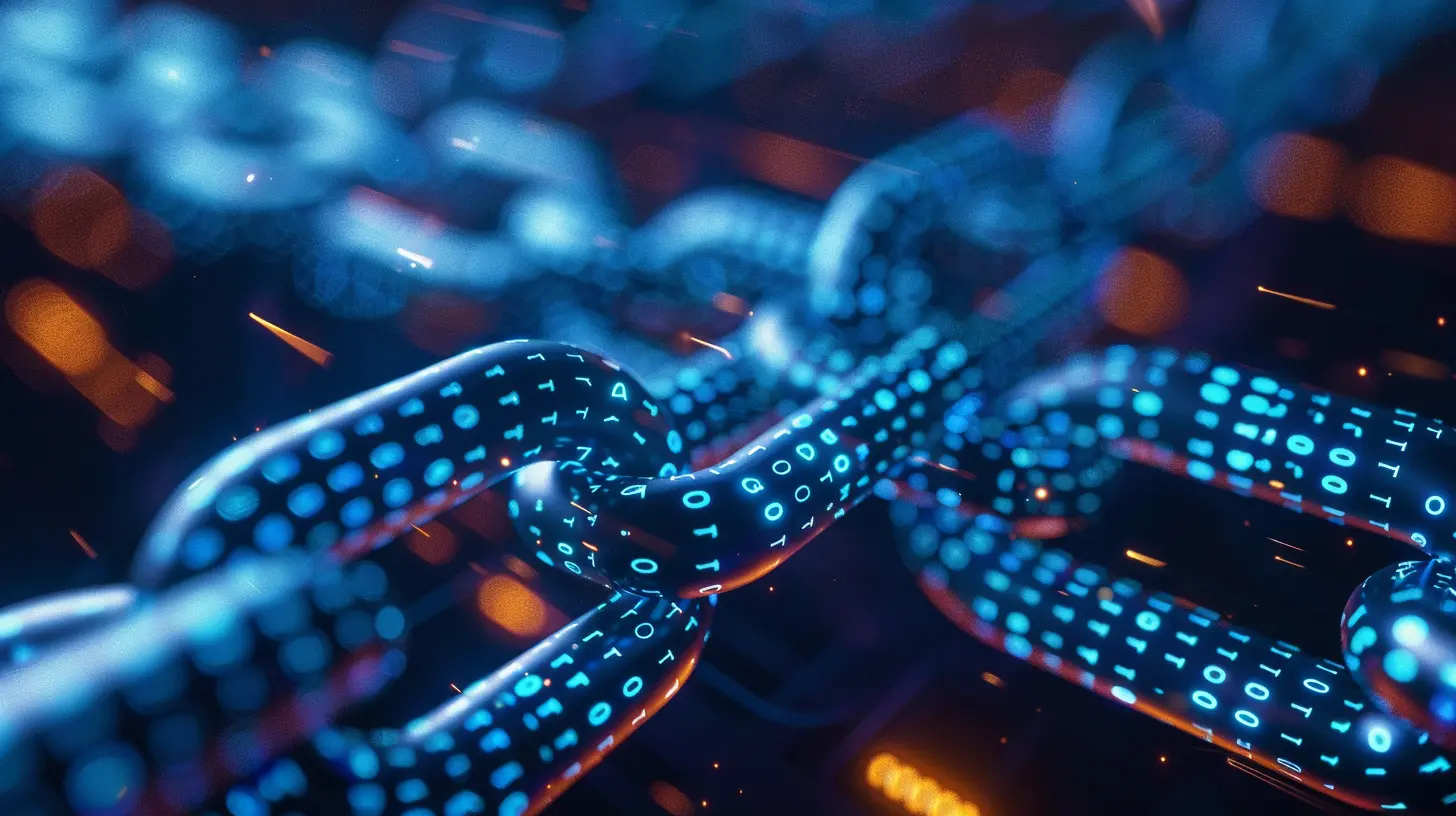
One of the biggest mistakes companies make is assuming that implementing blockchain will automatically modernize their supply chain. Blockchain is a digitalization tool, not a digitization tool. Digitization means converting physical information into digital format. Digitalization means using digital technology to change business processes and create new value.If you simply scan paper documents and store them on a blockchain, you have not gained much. You have a permanent record of a PDF, but the underlying process remains manual and error-prone. True digitalization requires rethinking how data is captured at the source. Instead of a warehouse worker typing a delivery confirmation into a system, a sensor on a truck can automatically log the time, location, and condition of a shipment. Instead of a customs broker manually entering tariff codes, a smart contract can validate them against a database.
This distinction matters because many failed blockchain projects are simply "blockchain washing" of existing inefficient processes. The technology does not fix bad data. If your input is garbage, the immutable ledger just makes that garbage permanent. The real value comes from integrating blockchain with IoT sensors, RFID tags, and automated data capture systems that feed accurate, real-time information into the ledger.
The Trade-Offs: Public versus Permissioned Blockchains
A common point of confusion is whether supply chain blockchains should be public or permissioned. Public blockchains like Bitcoin and Ethereum are open to anyone, and anyone can validate transactions. Permissioned blockchains, also known as consortium blockchains, restrict participation to approved entities.For most supply chain use cases, permissioned blockchains are the practical choice. The participants are known companies with legal relationships. They do not want their commercial data visible to the entire world. A permissioned network can enforce rules about who can read certain data, who can write certain data, and who can validate transactions. This provides privacy while still delivering the core benefits of a shared, tamper-evident ledger.
However, permissioned blockchains have a weakness. They rely on trust in the network operators. If the consortium is dominated by one large player, that player could theoretically manipulate the ledger if they control the majority of validating nodes. This is why governance is critical. The network should be designed with distributed control, meaning no single company owns a majority of the infrastructure.
Public blockchains, on the other hand, offer stronger censorship resistance and openness, but they are slower and more expensive for high-volume supply chain transactions. They also expose data that companies often consider proprietary. A hybrid approach is sometimes used, where a public blockchain anchors a hash of a private transaction to prove its existence without revealing details. This is elegant but adds complexity.
Smart Contracts: Powerful but Not a Substitute for Legal Agreements
Smart contracts are often described as "self-executing" contracts, but this is misleading. They are better understood as automated business logic that runs on a blockchain. They can trigger payments, send notifications, or update records when predefined conditions are met. For example, a smart contract might release a payment to a freight forwarder when a shipment is scanned at its destination.The advantage is speed and impartiality. No human needs to check whether the delivery occurred. The system does it automatically. This reduces disputes and speeds up cash flow, which is a major pain point for small suppliers who often wait 60 to 90 days for payment.
But smart contracts are not a replacement for legal contracts. They cannot interpret ambiguous language, handle unforeseen circumstances, or account for force majeure events. If a shipment is delayed due to a port strike, a smart contract that automatically penalizes the carrier would be unfair unless that condition was explicitly coded in. This means writing smart contracts requires extreme precision and careful legal review. A poorly designed smart contract can create more problems than it solves, especially if it executes automatically in a way that was not intended.
The Role of Oracles: Bridging the Physical and Digital Worlds
A blockchain cannot know that a physical event occurred unless it receives data from the outside world. This is where oracles come in. An oracle is a mechanism that feeds external data into a blockchain. In a supply chain context, an oracle might be an IoT sensor that reports temperature, a GPS device that reports location, or a trusted third party that confirms a physical inspection.Oracles introduce a point of vulnerability. If the oracle is compromised or provides inaccurate data, the blockchain will faithfully record that inaccurate data as fact. This is known as the "garbage in, garbage out" problem. To mitigate this, companies should use multiple independent oracles for critical events and design consensus mechanisms to detect anomalies. For example, if one sensor reports a temperature of 30 degrees while two others report 4 degrees, the system should flag the outlier.
This is a subtle but crucial point. Many executives assume that blockchain ensures data integrity. It does not. It ensures record integrity. The data itself must be trustworthy at the point of entry. This is why physical inspections, tamper-evident seals, and certified devices remain essential. Blockchain does not eliminate the need for trust in the physical world; it makes the digital representation of physical events more reliable.
Common Misconceptions and Pitfalls to Avoid
The most persistent misconception is that blockchain makes supply chains fully transparent to consumers. In reality, most supply chain blockchains are permissioned, and consumer-facing visibility is a deliberate design choice. A company can use blockchain to verify its own sourcing claims internally without exposing all its supplier data to the public. Transparency is a business decision, not an inherent property of the technology.Another pitfall is underestimating the difficulty of onboarding. A blockchain is only as valuable as the number of participants who use it. If a manufacturer builds a blockchain network but its top ten suppliers refuse to join, the network has little value. The challenge is chicken-and-egg: you need critical mass to generate value, but you need value to attract participants. Successful implementations often start with a small, powerful anchor like a large retailer or a government agency that can mandate participation from its vendors.
Data standardization is another hurdle. Blockchain works best when all parties agree on data formats, unit measures, and product identifiers. Without standards, each participant might record the same physical good in a different way, creating confusion. Industry consortia like GS1 have developed standards for product identification, but adopting them requires effort and investment. Companies that skip this step often find that their blockchain network becomes a digital Tower of Babel.
When Blockchain Is Not the Right Solution
It is equally important to know when blockchain is overkill. If you have a simple, linear supply chain with two or three trusted partners and no history of disputes or fraud, a traditional shared database will work fine. Blockchain introduces overhead in terms of computational cost, governance, and technical expertise. If your problem is simply that your spreadsheets are messy, buy better software.Blockchain is also a poor fit for high-frequency, low-value transactions where speed matters more than immutability. A public blockchain might confirm a transaction in minutes, but that is too slow for real-time inventory adjustments in a fast-moving warehouse. In such cases, a traditional database with strong access controls is more appropriate.
The technology shines when you have multiple parties who do not fully trust each other, when you need a permanent audit trail, and when the cost of disputes or fraud is high. Think of it as a trust machine for environments where trust is scarce. If trust is already abundant, the machine is unnecessary.
Practical Steps for Implementation
For a company seriously considering blockchain, the first step is not to buy software or hire a blockchain developer. The first step is to map your current processes and identify a specific pain point. Ask yourself: where do we spend the most time reconciling data? Where do disputes occur most frequently? Where do we have the least visibility into our own supply chain?Pick a narrow use case that has clear ROI. For example, perhaps you are a coffee importer who needs to prove to buyers that your beans are ethically sourced. You could start by putting your farm-level purchase records on a permissioned blockchain and sharing access with your direct buyers. If they find value in it, you can expand to logistics and payments.
Next, choose your partners carefully. A blockchain network is a collaborative effort. You need at least one or two other participants who are willing to invest time and resources. Look for partners who have a reputation for integrity and who are likely to stay committed. Governance should be established upfront, including rules for adding new participants, resolving disputes, and handling technical upgrades.
Finally, do not neglect change management. Your warehouse staff, logistics managers, and finance team will need to adapt to new workflows. A blockchain system that is technically excellent but user-hostile will fail. Invest in training and feedback loops. The best system is one that people actually use, not the one with the most impressive whitepaper.
The Future: Interoperability and Network Effects
The long-term potential of blockchain in supply chains depends on interoperability. Right now, there are dozens of competing blockchain networks, each with its own standards and governance. A supplier might be on one network for a pharmaceutical client and another for a food client, which creates a new kind of fragmentation.Efforts are underway to create cross-chain protocols that allow data to move between different blockchains. However, these are still early stage. In the meantime, companies should focus on building flexible systems that can integrate with multiple networks rather than locking themselves into a single proprietary solution.
Another trend is the convergence of blockchain with artificial intelligence and the Internet of Things. AI can analyze the large datasets stored on blockchains to predict supply chain disruptions, optimize routes, or detect anomalies. IoT sensors provide the real-world data that makes the blockchain meaningful. Together, these technologies create a feedback loop where physical events are continuously recorded, analyzed, and acted upon.
But do not wait for the perfect technology stack. The principles that matter are already clear: shared data, tamper resistance, and automated execution. Start small, focus on a real problem, and build trust with your partners. The technology will continue to evolve, but the business benefits will come from how well you integrate it into your operations, not from the technology itself.
Final Thoughts
Blockchain is not a silver bullet for the supply chain industry, but it is a significant tool for addressing chronic issues of trust, transparency, and efficiency. The companies that will benefit most are those that approach it with humility and a clear understanding of its limits. They will not try to put everything on a blockchain. They will identify the specific points where shared, immutable records create real value, and they will build pragmatic solutions around those points.The supply chain industry has survived for centuries on relationships and paper. It will not transform overnight. But as digital natives rise through the ranks and as customers demand greater accountability, the pressure to modernize will only increase. Blockchain, used wisely, offers a way to meet that pressure without sacrificing the human judgment and flexibility that still make supply chains work.
all images in this post were generated using AI tools
Category:
Industry AnalysisAuthor:

Susanna Erickson
Discussion
rate this article
2 comments
Zarenith McCallum
Blockchain offers transparency and efficiency, transforming supply chain processes for greater trust and accountability.
September 29, 2026 at 3:43 AM
Susanna Erickson
Absolutely, blockchain's ability to enhance transparency and streamline operations can significantly build trust in supply chains. It's an exciting shift for the industry.
Diesel Pruitt
Blockchain could be the supply chain's secret weapon, offering transparency and efficiency. It's time for businesses to adapt or risk being left behind in the digital dust.
September 20, 2026 at 10:19 AM
Susanna Erickson
I agree, blockchain's potential for enhancing transparency and efficiency is significant. Businesses that embrace this technology can gain a competitive edge.