Emphasizing Value Chains in Your Business Model Strategy
3 February 2026
Okay, let’s get real for a second. If you've ever sat through a business meeting where someone starts rambling on about "value chains" with all the excitement of a soggy sandwich, you're probably thinking, “Great, another buzzword parade.” But hold up—before you chuck that idea into the corporate jargon trash bin, hear me out.
Emphasizing value chains in your business model strategy isn’t just MBA speak for “please hire me, I know big words.” It's actually the secret sauce that can shake up how your business operates—and I mean shake like champagne on New Year’s Eve.
Let’s take a not-so-dull deep dive (I promise not to bore you to sleep) into how value chains can not only keep your business afloat but make it sail like a five-star cruise line. Anchors away!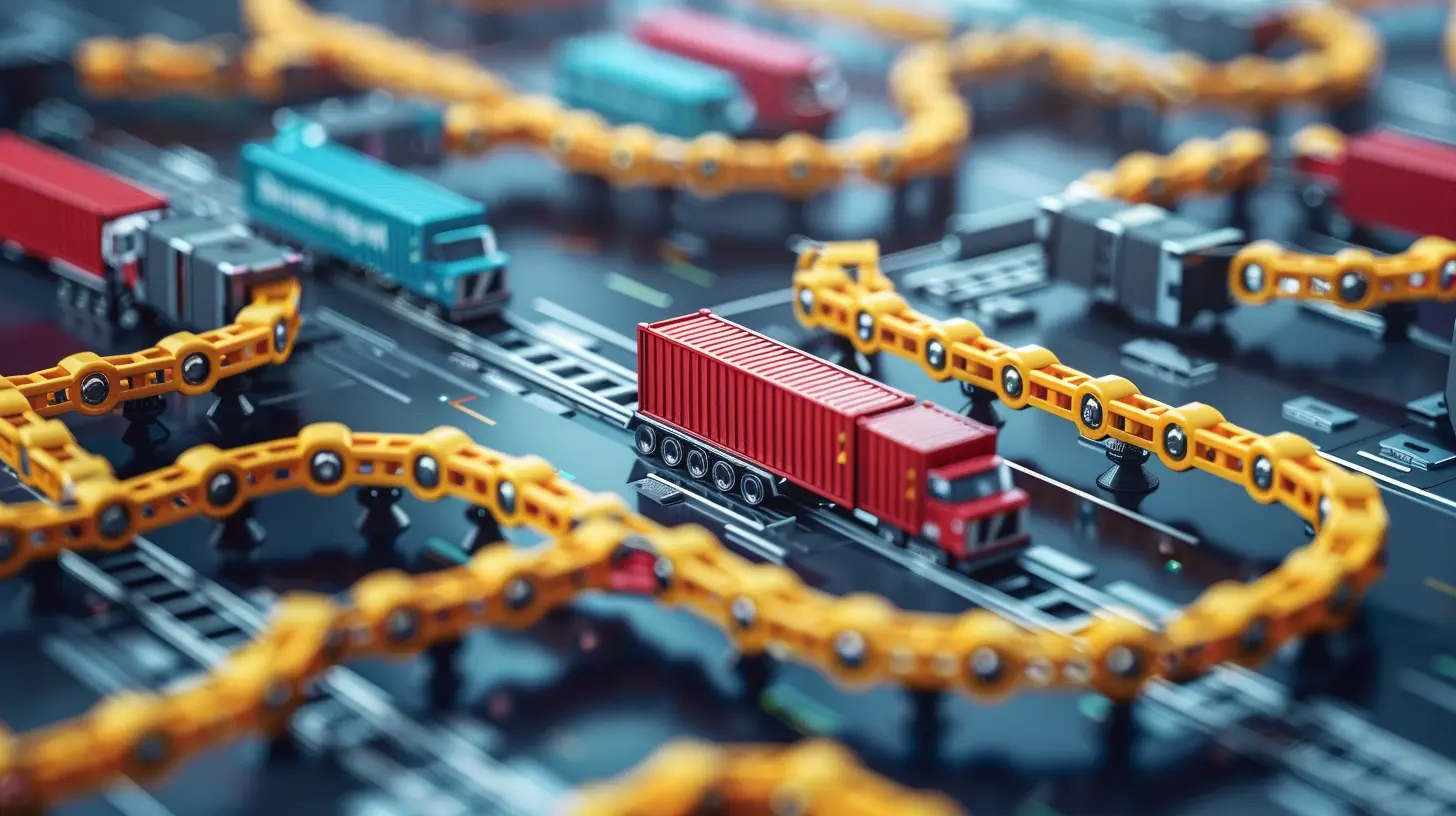
What Is a Value Chain, Anyway?
First off, imagine a factory. Not just any factory but a magical one where every step—from receiving raw materials to delivering a finished, shiny product—is a chance to add value.That, my friend, is a value chain. Coined by Michael Porter (you know, the guy who basically invented business strategy), the value chain maps out every activity your business does to create value for your customers. Emphasis on value, because let’s face it—people aren’t going to pay for stuff that feels like it came from a cereal box prize.
Think of it like a pizza. You’re not just handing someone dough and tomato sauce. Nope, there’s mixing, kneading, baking, topping, slicing, boxing—and each step adds just a bit more va-va-voom until voila! That cheesy goodness is worth $20 instead of $2.
Why Your Business Model Needs a Value Chain Wake-Up Call
You might be wondering, “Is this just another thing I’m supposed to pretend to care about while I go back to selling my widgets on TikTok?” Not quite.Here’s the thing: businesses that don’t pay attention to their value chain are basically like ducks wearing roller skates—chaotic, directionless, and seconds away from falling on their beaks.
1. You Can’t Optimize What You Don’t Understand
If you don’t know what each part of your business is doing (or not doing), how are you supposed to improve it? Exactly. Blindfolded decisions rarely end well.Looking at your value chain gives you X-ray vision into where your operations are hemorrhaging cash, time, or customer goodwill.
2. It Makes Competition Cry (In a Good Way)
Businesses that master their value chain… well, they become the Usain Bolt of their industry. Fast, efficient, and hard to beat.If you’re delivering more value than your competitor—and doing it faster, cheaper, or shinier—guess who’s winning the customer popularity contest?
Spoiler: it’s not the guy with a bloated supply chain and zero clue where all the profit leaks are.
3. It’s Your Business Strategy’s Backbone
Try building a business strategy without understanding your value chain. It’s like trying to build IKEA furniture without the tiny Allen key. Frustrating, painful, and guaranteed to collapse.
The Magical Tour of the Value Chain: Primary & Support Activities
Oh boy, it’s time for some textbook terminology. Wait, don’t run! I pinky promise, I’ll keep it snappy.Porter breaks the value chain into two main activities: primary and support. Think of them like the lead actors and the stage crew. One’s in the spotlight, the other’s behind-the-scenes, but they both make the show happen.
Primary Activities (aka the Stars of the Show)
These directly touch your product or service. They’re the “go go go!” of your business.- Inbound Logistics – Getting the raw stuff in. Trucks, warehouses, inventory—basically, the backstage deliveries.
- Operations – Where the magic happens. This is your chef cooking the food or your coders writing the app.
- Outbound Logistics – Time to ship it out! Delivery systems, distribution channels, the whole shipping shebang.
- Marketing & Sales – The flashy part. Ads, social posts, sales teams—getting people to actually care.
- Service – The follow-up act. Support, warranties, FAQs. Keep customers happy so they don't ghost you.
Support Activities (aka Unsung Heroes)
These don’t directly touch the end product, but man, are they important.- Firm Infrastructure – Legal, finance, management. AKA the adulting department.
- HR Management – Hiring, training, benefits. Because you can’t run a business with zombies.
- Technology Development – IT, software, tech upgrades. Keeping the digital lights on.
- Procurement – Buying stuff smartly. You want bulk discounts? This is your team.
Real Talk: How to Actually Use a Value Chain in Your Strategy
Time to move from theory to action. Let’s talk about how you can roll up your sleeves and stitch the value chain into your business model without turning into a strategy zombie.Audit Your Chain Like a Financial Crime Scene
Get detective-level curious. Track everything from the light bulbs in your office to your onboarding process. Where is value leaking? Where are you accidentally setting money on fire?Ask stuff like:
- Are we overpaying for raw materials?
- Is our delivery slower than a snail on vacation?
- Is our customer service team actually helping, or just playing Minesweeper?
Prioritize Value-Adding Activities
Here’s a secret: not all steps in your process deserve equal attention. Focus on the steps where customers really notice the value.Example: If you’re selling artisan coffee, people care more about bean quality and brewing than how your invoices are filed. Obsess over the sizzle, not just the spreadsheets.
Automate the Boring Stuff
You’ve got better things to do than manually sort email replies. If a process can be automated, do it. Free up your team’s brainpower for creative or strategic tasks instead of grunt work.Use tech to grease the wheels—ERP software, CRMs, AI tools—you name it. If it saves time, it saves cash.
Collaborate With Partners Who "Get It"
Your suppliers, distributors, and third-party vendors are part of your value chain too. If they’re dragging their feet or phoning it in, it’s your reputation on the line.Find partners who are just as neurotic about quality, timeliness, and innovation as you are.
Common Value Chain Fails (And How to Dodge Them Like Neo in The Matrix)
Let’s be honest—no one gets this stuff right on the first try. But you can sidestep some classic banana peels if you’re paying attention.1. Assuming "Value" Means "Cheapest"
Nope. Value = perception of benefit vs. cost. People will pay more for premium. Don't gut quality just to reduce prices, unless you enjoy dealing with angry reviews and returns.2. Micromanaging Every Step
Yes, detail matters, but don't fall into the trap of trying to optimize everything at once. It’s like trying to juggle flaming swords blindfolded—impressive until it goes horribly wrong.3. Ignoring Feedback Loops
Your customers and employees are goldmines of insight. If they say something’s broken, listen. Your value chain should evolve, not fossilize.Value Chain Metrics: Because Feelings Don’t Pay the Bills
You might "feel" like your operations are efficient, but unless you’re measuring stuff, you're basically guessing.Track metrics like:
- Lead Time – How fast do you move from order to delivery?
- Customer Retention Rate – Are people sticking around?
- Profit Margins at Each Step – Where are you most (or least) efficient?
- Net Promoter Score (NPS) – Are customers recommending you, or warning others?
Treat your value chain like a sports team. If someone’s not pulling their weight, they’re off the field.
The Final Word: Value Chains Aren’t Just for MBAs
Look, you don’t have to dust off your business school textbooks to understand the importance of a value chain. You just need to care.Care about how your business creates value, how you deliver it, and how you can do it better than the guy next door.
Your strategy isn’t just about vision boards and mission statements. At the end of the day, it’s about execution—and that’s where the value chain struts into the spotlight.
So, yes, go ahead and emphasize your value chain. Loudly. Proudly. Maybe even obnoxiously. Because the businesses that do? They don’t just survive—they dominate.
TL;DR (Too Long; Definitely Worth Reading)
- A value chain is every step of your process that adds value to your product or service.- Understanding your value chain helps you cut costs, improve quality, and destroy the competition (with kindness, of course).
- Focus on both primary (customer-facing) and support (behind-the-scenes) activities.
- Break down what’s working, what’s failing, and what deserves more of your energy.
- Profit isn’t just made in sales—it’s made in how well every part of your business functions together. Like a Swiss watch. Or a perfectly choreographed flash mob.
So stop winging it. Start mapping it.
all images in this post were generated using AI tools
Category:
Business ModelsAuthor:

Susanna Erickson
Discussion
rate this article
2 comments
Betsy Duffy
Great insights on leveraging value chains! Implementing these strategies can truly enhance overall business efficiency and customer satisfaction. Thank you!
March 2, 2026 at 3:23 AM
Susanna Erickson
Thank you for your kind words! I’m glad you found the insights helpful for enhancing efficiency and customer satisfaction.
Eva Phillips
Value chains: the secret sauce of business strategy! Like a well-coordinated dance, each step counts—just try not to step on your partner’s toes. Let’s waltz our way to success!
February 4, 2026 at 5:05 AM
Susanna Erickson
Absolutely! Just like a dance, every element of the value chain needs to harmonize for optimal success. Let's waltz towards a more strategic approach together!