What’s Fueling the Growth of Agritech Startups
22 September 2026
Agriculture has always been a business of thin margins and high uncertainty. A farmer's income depends on weather, pests, commodity prices, and timing, and most of those variables sit outside their control. That reality explains why agritech startups struggled for decades to gain traction. The technology was often interesting but disconnected from the economics of actually running a farm. That has changed. In the past ten to fifteen years, a combination of cheaper hardware, better data infrastructure, shifting consumer expectations, and genuine pressure on the food system has created conditions where agritech companies can build real businesses rather than pilot projects that never scale.
This article examines what is actually driving that growth, where the opportunities are real, where the hype outpaces the substance, and what founders and investors should think about before committing capital or career to the sector.
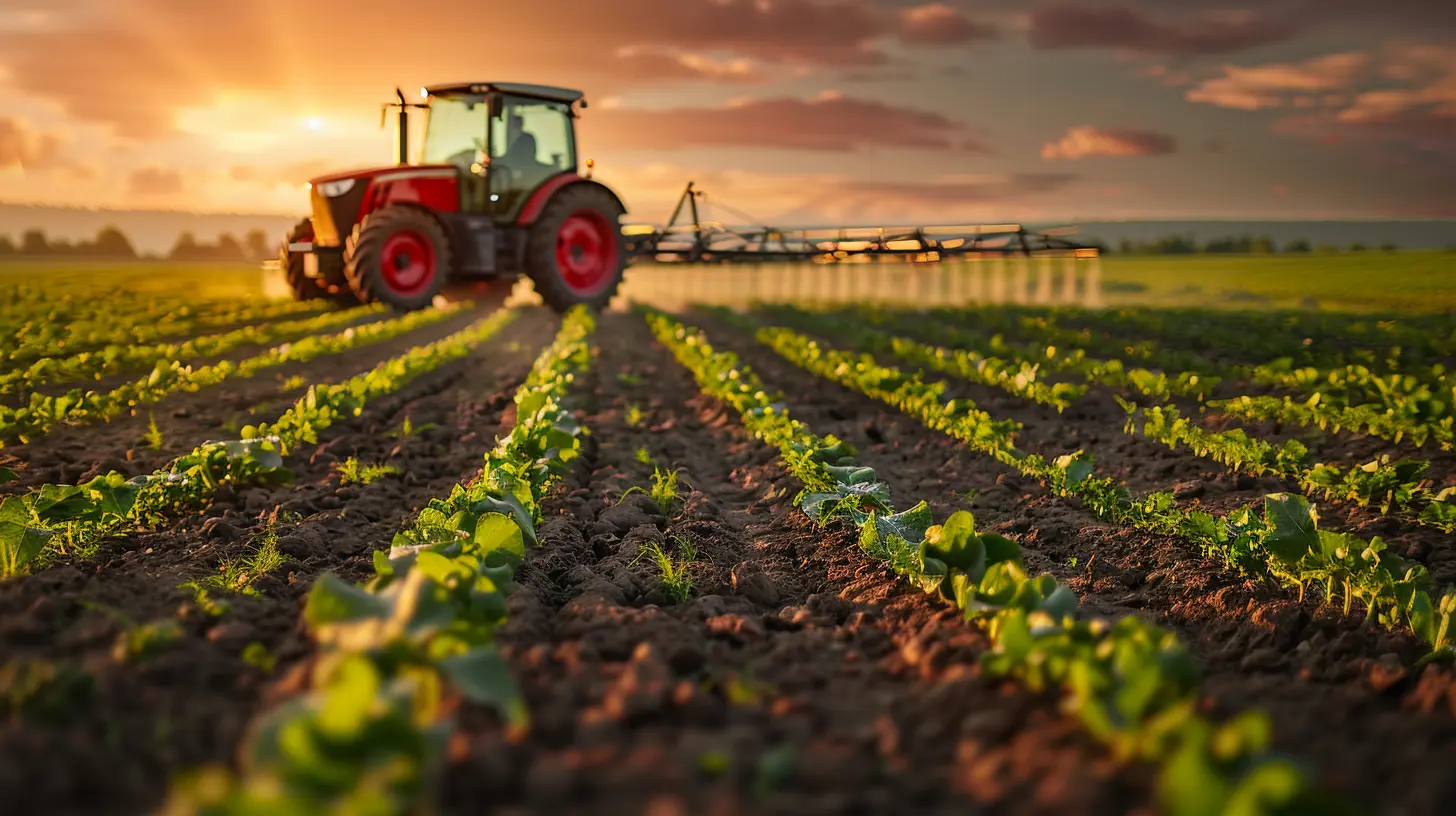
The Structural Pressures Nobody Can Ignore
Before looking at technology, it helps to understand the forces pushing agriculture toward change. Agritech is not growing because software is fashionable. It is growing because the underlying system is under strain.A shrinking labor pool
In most developed economies, the average age of farmers keeps rising, and fewer young people enter the profession. Rural labor shortages are not a temporary problem. They reflect long-term demographic and economic trends. When a farm cannot find enough workers at a viable wage, automation stops being a novelty and becomes a necessity. This is why robotics companies focused on harvesting, weeding, and planting have attracted serious investment. The demand is not speculative. It is a response to a real operational constraint.Input costs that keep climbing
Fertilizer, fuel, seed, and water have all become more expensive and more volatile. A farm that spends a large share of revenue on inputs has a strong incentive to use those inputs more precisely. This is the economic foundation for precision agriculture. Variable rate application, soil sensors, and satellite imagery are not adopted because they are elegant. They are adopted when they demonstrably reduce cost per acre.Climate volatility
Unpredictable weather patterns make traditional planning less reliable. Farmers increasingly need tools that help them respond to conditions in real time rather than follow a fixed calendar. This drives demand for forecasting, monitoring, and decision-support platforms. The value is not in the data itself but in the decisions it improves.Consumer and regulatory pressure
Buyers, retailers, and regulators increasingly ask questions about how food was produced. Traceability, sustainability claims, and food safety documentation have moved from nice-to-have to required. That creates a market for software that captures and verifies farm-level information. It also creates a moat for companies that become the system of record for compliance.
Technology Costs Have Fallen Far Enough to Matter
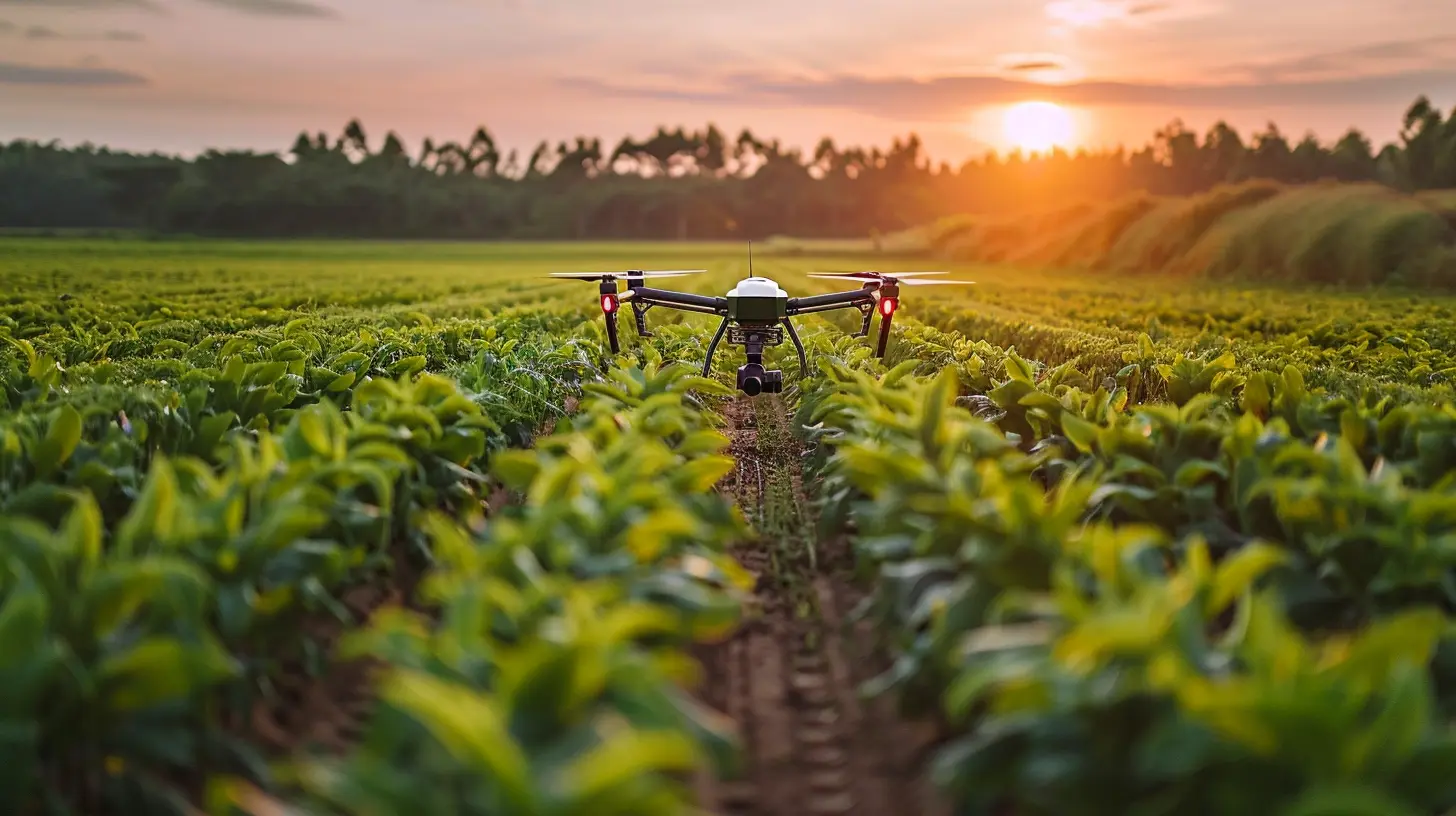
A major reason agritech is growing now rather than twenty years ago is simple economics. The cost of the core building blocks has dropped dramatically.Sensors that once cost thousands of dollars now cost a fraction of that. Satellite imagery that required expensive contracts is available through commercial providers at accessible prices. Cloud computing removed the need for on-farm servers. Smartphones put a capable computer in every farmer's pocket. Drones became cheap enough for individual operations to own rather than rent.
When the cost of data collection falls below the value of the decisions it enables, adoption accelerates. That threshold has been crossed in many parts of agriculture, though not uniformly. High-value crops like fruits, vegetables, and specialty grains tend to cross it first because the per-acre margin is higher and the cost of a mistake is larger. Row crops like corn and soy have lower margins per acre, so the technology must be cheaper or the benefit must be clearly measurable at scale.
This distinction matters for anyone evaluating an agritech business. A tool that works beautifully for a vineyard may never pencil out for a wheat farm. Understanding the crop economics is as important as understanding the technology.
Business Models That Actually Fit Farming
Early agritech companies often failed because they tried to sell software the way enterprise SaaS companies do. Agriculture does not work that way. Farms are small businesses with seasonal cash flow, limited IT staff, and a deep skepticism of anything that adds complexity without immediate payoff.The companies that have grown have adapted their models to these realities. Several approaches stand out.
Hardware plus subscription
Selling the device at or near cost and charging for the data or insights it generates aligns incentives. The farmer sees value only if the service delivers. The company builds recurring revenue. This model works well when the hardware is genuinely useful on its own and the subscription adds clear incremental value.Outcome-based pricing
Some companies charge based on results, such as a percentage of yield improvement or input savings. This reduces the farmer's risk and builds trust, but it requires the company to have confidence in its own product and the ability to measure outcomes accurately. It is powerful when it works and disastrous when measurement is ambiguous.Marketplace and aggregation
Platforms that connect farmers to buyers, lenders, or service providers can scale quickly because they do not need to own assets. The challenge is liquidity. A marketplace with few buyers or sellers on either side provides little value. These businesses often need heavy early investment to reach critical mass, and many never get there.Embedded finance
Credit, insurance, and payments are persistent pain points in agriculture. Companies that combine a software layer with financial services can capture more value per customer and improve retention. The trade-off is regulatory complexity and balance sheet risk. Not every team is equipped to handle both.Each model has trade-offs. The right choice depends on the crop, the geography, the sales channel, and the team's strengths. There is no universal answer, and founders who copy a model without understanding why it works in its original context usually struggle.
Data as the Real Asset
The most durable agritech companies tend to be those that accumulate proprietary data over time. A single season of field data is interesting. Ten seasons across thousands of fields is a defensible asset that improves recommendations, reduces risk, and raises the cost of switching.But data in agriculture is complicated. Ownership is contested. Farmers are protective of information that could be used against them in negotiations with buyers or insurers. Regulations vary by country. Companies that handle this poorly lose trust quickly and rarely recover it.
The practical lesson is that data strategy cannot be an afterthought. It must be designed into the product from the start, with clear terms about who owns what, how data is used, and what the farmer gets in return. Transparency is not just ethical. It is commercially necessary.
The Investment Landscape
Venture funding for agritech has grown substantially, though it has not been a straight line. There have been periods of exuberance followed by correction. That pattern is normal for emerging sectors and does not undermine the long-term trend.What has changed is the type of investor involved. Early agritech was dominated by generalist venture firms and impact investors. Today, strategic investors including food companies, equipment manufacturers, and agribusinesses play a larger role. Their involvement brings industry knowledge, distribution channels, and patience that pure financial investors often lack.
For founders, this matters. A strategic investor can open doors that would take years to open otherwise. The trade-off is potential loss of independence and alignment with a partner's roadmap rather than the market's. Both paths are valid. The choice should reflect the company's long-term goals.
Regional Differences That Shape Strategy
Agritech is not a single global market. The problems, regulations, and buying behavior differ dramatically by region.In North America, farms are large, mechanized, and capital-intensive. Adoption of precision agriculture is relatively advanced. The challenge is standing out in a crowded field and proving ROI at scale.
In Europe, regulation plays a larger role. Sustainability requirements, pesticide restrictions, and subsidy structures shape what farmers will pay for. Companies that align with policy direction often find faster adoption.
In Asia, smallholder farms dominate. Solutions must be affordable, mobile-first, and often delivered through cooperatives or service providers rather than direct sales. The volume potential is enormous, but the unit economics require discipline.
In Africa and parts of Latin America, leapfrogging is common. Mobile payments, remote sensing, and digital advisory can reach farmers who never had access to traditional extension services. The opportunity is real, but infrastructure gaps and currency risk complicate execution.
A strategy that works in Iowa may fail in Kenya. Founders who treat agriculture as one market usually learn this the hard way.
Common Mistakes and Misconceptions
Several patterns show up repeatedly among agritech companies that struggle.Assuming farmers will buy technology for its own sake
They will not. Farmers buy outcomes: higher yield, lower cost, less risk, more time. If the product does not clearly deliver one of those, it will not sell, no matter how sophisticated it is.Underestimating the sales cycle
Agricultural purchasing is seasonal. A missed window means waiting a year. Sales teams must be built around that rhythm, and cash flow planning must account for long gaps between effort and revenue.Ignoring the dealer and cooperative network
In many regions, farmers buy through trusted intermediaries. Trying to bypass them can be slower and more expensive than partnering with them. Direct-to-farmer works in some contexts, but it is not universally superior.Overpromising on AI
Machine learning can be genuinely useful for pest detection, yield prediction, and equipment maintenance. It is not magic. Models trained on one region or crop often fail elsewhere. Companies that oversell capability lose credibility when results disappoint.Neglecting the last mile
Collecting data is easy compared to changing behavior. The hardest part of agritech is often the human layer: training, support, and follow-through. Companies that treat this as a cost center rather than a core function tend to see low engagement and high churn.
What Separates Winners From the Rest
Looking across the sector, a few traits distinguish companies that scale from those that stall.They solve a specific, measurable problem for a clearly defined customer. They do not try to be everything to everyone.
They price in a way that reflects agricultural cash flow, often with seasonal or outcome-linked structures.
They invest in trust-building through pilot programs, reference customers, and transparent data practices.
They build distribution partnerships rather than assuming they can reach farmers alone.
They maintain discipline about unit economics, even when growth pressure tempts them to subsidize adoption indefinitely.
None of this is glamorous. It is the unglamorous work that turns a promising technology into a durable business.
What to Watch Going Forward
Several trends are likely to shape the next phase of agritech growth.Consolidation is probable. Many point solutions will be absorbed into larger platforms that offer a full suite of tools. Founders should think about whether they are building to stand alone or to be acquired.
Integration with equipment will deepen. Tractors, sprayers, and harvesters are becoming data platforms in their own right. Companies that integrate well with major equipment brands will have an advantage.
Regenerative agriculture and carbon markets will continue to attract attention, though the economics remain unsettled. Companies that can verify practices credibly and reward farmers fairly may find a durable niche. Those that rely on vague claims will not.
Climate adaptation tools will grow in importance as weather variability increases. The demand is real, but the science is hard, and companies must be honest about uncertainty.
Practical Advice for Founders and Investors
If you are building in this space, start with the farmer's economics, not the technology. Spend time in the field. Understand the seasonal rhythm. Talk to dealers and cooperatives. Test pricing assumptions early and often.If you are investing, look beyond the demo. Ask how the company acquires customers, what the payback period is, and how it handles the seasonality of agricultural revenue. Be skeptical of growth that depends on continuous subsidy.
Above all, recognize that agriculture rewards patience. The sector moves slower than software, but the problems are large and persistent. Companies that earn trust and deliver measurable value tend to last. Those that chase trends rarely do.
The growth of agritech startups is not a bubble. It is a response to real pressures and real opportunities. The winners will be those who respect the industry's constraints while finding ways to relieve them.
all images in this post were generated using AI tools
Category:
Industry AnalysisAuthor:

Susanna Erickson